
Exhibit - No. 03
Rain
Garden
A sunken garden that drinks the storm. See how a shallow basin of native plants catches runoff, filters out pollutants, and keeps our streams cool and clean.
Location
Near the stream corridor
Best Season
After a good rain
— What is s Rain Garden?
A giant sponge for the storm.
A rain garden is a sunken area in the landscape that collects rainwater runoff from roofs, driveways and streets, then lets it soak slowly into the ground.
It works like a giant sponge — planted with grasses and flowering perennials that thrive on the rush of water after a storm and the dry spells in between.
12–36 hrs
80–90%
of pollutants & sediment removed from runoff
In The Park

Where the landscape drains towards the stream
— How it Helps
Four jobs, one shallow basin.
A well-built rain garden does the quiet work of protecting the streams that Blair County is famous for.
Natural filters
They catch stormwater carrying sediment, motor oil, road salt and other pollutants before it ever reaches the stream.

They slow the flow
Heavy rain creates fast-moving runoff. Rain gardens catch it and let it soak in — instead of rushing downstream to cause flooding.

They create green space
Planted with beautiful PA-native grasses, flowers and shrubs, they become a landscape feature and habitat for pollinating birds and insects.

They protect aquatic life
Many of our stream fish need cold water. Hot roofs and roadways warm summer runoff — rain gardens trap and cool it first.
By The Numbers
Small basin, big difference
of all water pollution comes from pollutants carried by rainwater runoff, the US EPA estimates.
more water soaks into the ground from a rain garden than from a conventional lawn.
A rain garden is not a pond or wetland — built correctly, it drains within 12–36 hours.
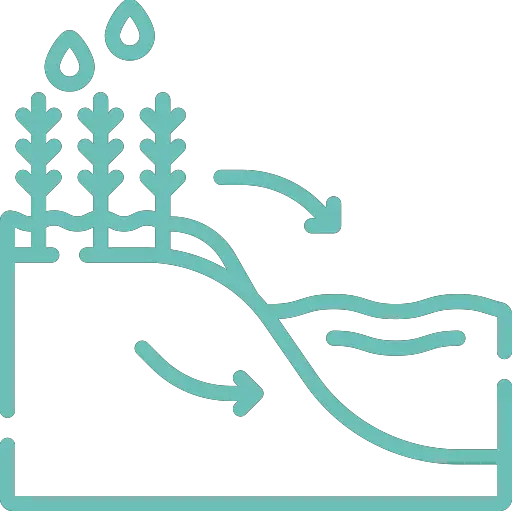
Rain gardens can remove about 80–90% of pollutants and sediment from rainwater runoff.
— See it in the park
Explore. Learn. Grow.
Throughout NatureWorksPark, interpretive signs tell you each exhibit's story. You can learn all about how rain gardens interact with nature — right where you're standing.
step 1
Step 2
Step 3
Explore the other park exhibits
BROWSE ALL PARK EXHIBITS →
— Plan Your Visit
See where
the rain goes.
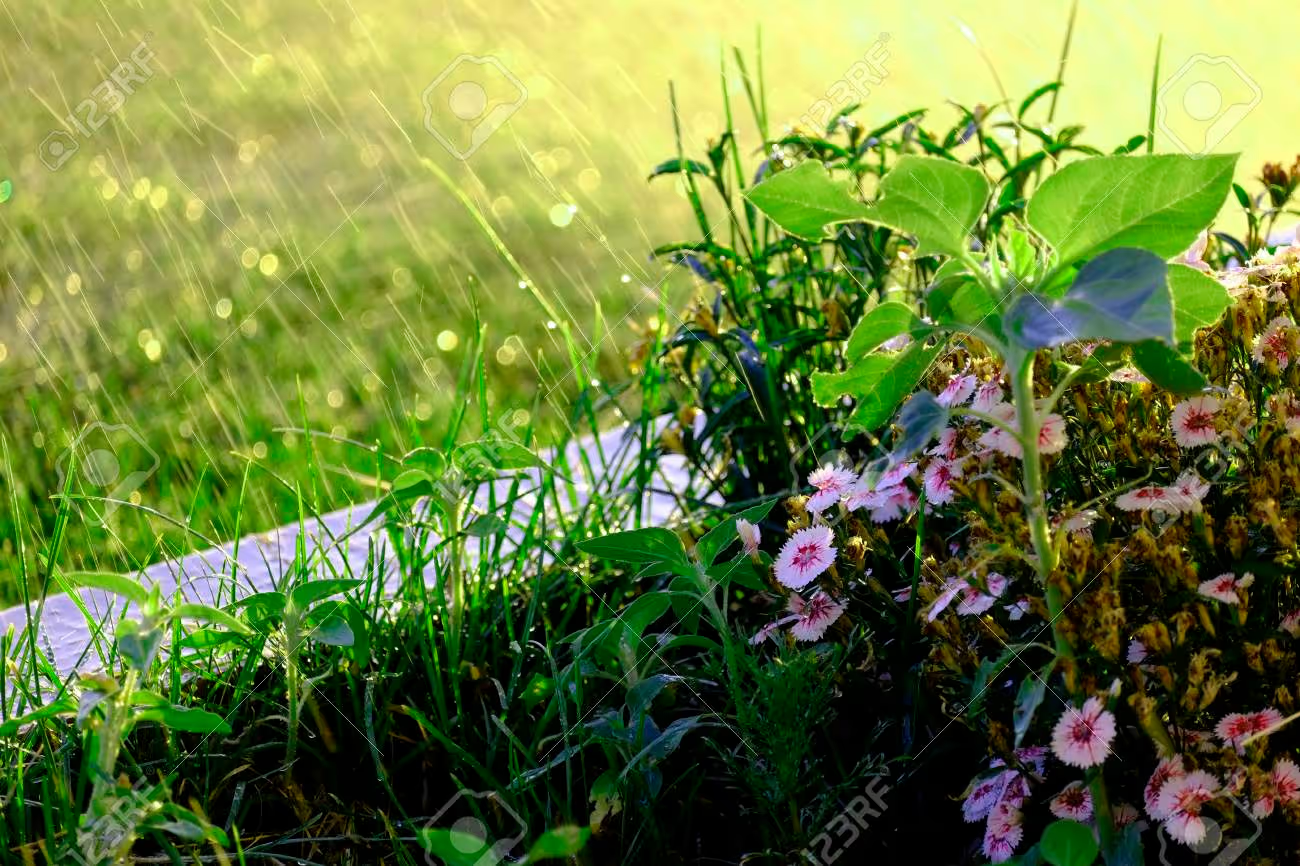
The Rain Garden sits along the path toward the stream — come after a storm to watch it fill, then drain, exactly as designed.