
Exhibit - No. 8
Exceptional Value Wetland
Pennsylvania's highest class of wetland protection. Cross the boardwalk into a rare, fully protected world of water, reeds and song — and see why a wetland earns the word "exceptional."
Location
North boardwalk loop
Best Season
Spring & early summer
— What is an Exceptional Value wetland?
The most protected water in Pennsylvania.
Pennsylvania sorts its wetlands by ecological importance. "Exceptional Value" — or EV — is the highest tier, reserved for wetlands so rare, so clean, or so vital to wildlife that the state shields them from almost any disturbance.
An EV wetland can't simply be drained or filled and replaced elsewhere. Its value is in this place — the species it shelters, the stream it feeds, and the floodwater it holds back.
Protects
Stores
floodwater, recharging groundwater as it drains
In The Park
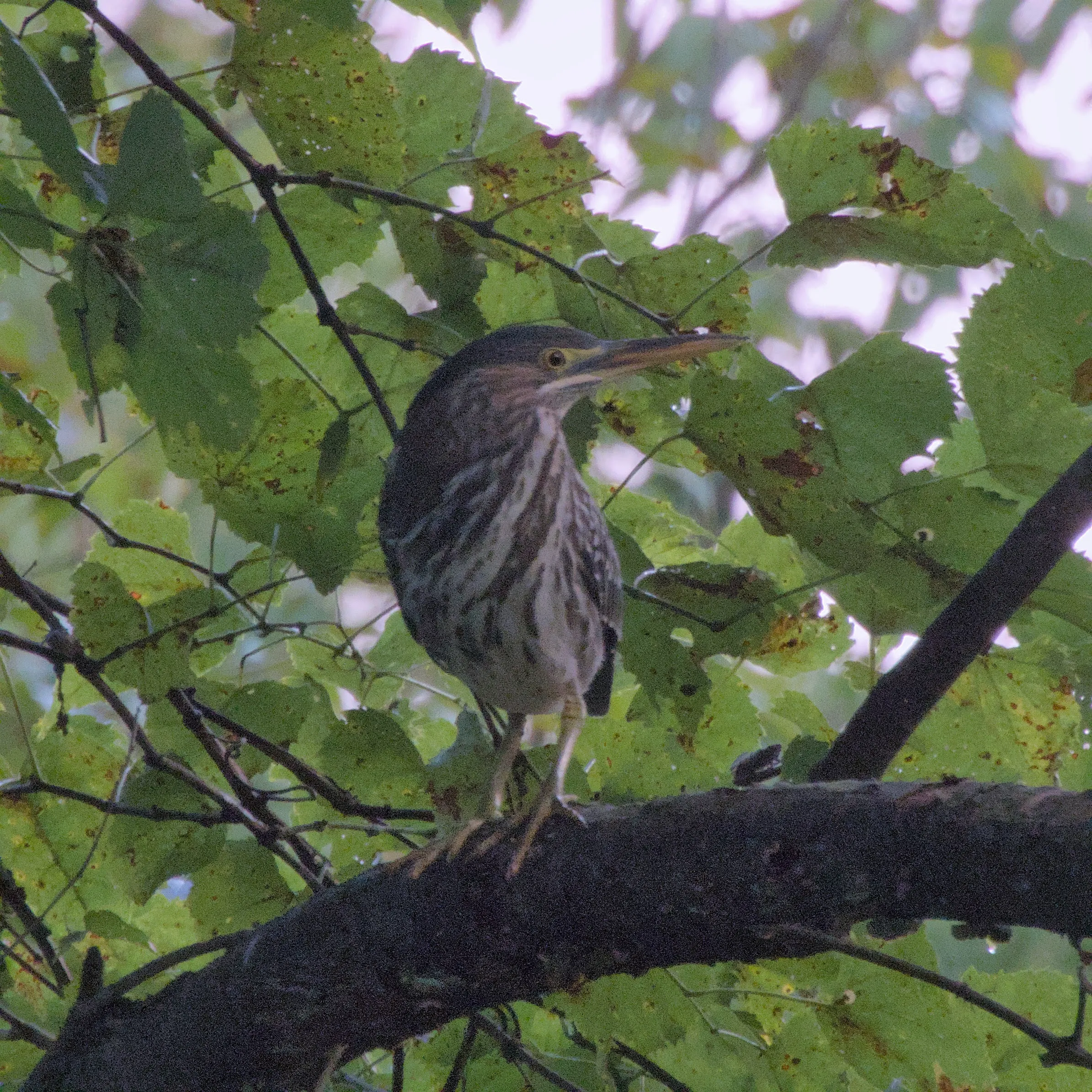
A green heron working the shallows
— Why it matters
Rare, irreplaceable, and worth the name.
Wetlands are among the most productive ecosystems on Earth — and an Exceptional Value wetland packs the most life into the smallest space.
It cleans the water
Wetland plants and soils trap sediment and pull nutrients, metals and other pollutants out of the water before it moves downstream.

It absorbs floods
Like a giant sponge, a wetland soaks up storm surges and slowly releases the water — easing flooding and recharging groundwater.

It shelters rare life
EV status often comes from the threatened or endangered plants and animals that depend on the wetland — and nowhere else.

It feeds the food web
Insects, amphibians, fish and birds all stack up here — a wetland is a nursery and a pantry for the wider landscape.
— How a wetland earns it
Four ways to be "Exceptional Value."
Under Pennsylvania's wetland rules, a wetland is designated Exceptional Value if it meets any one of these conditions.

It sits along the best streams
The wetland lies in or along the floodplain of a stream the state has already named Wild, Scenic, High Quality, or Exceptional Value — sharing in that water's protection.

It harbors rare species
It serves as habitat for plants or animals listed as threatened or endangered — making the wetland itself critical to their survival.

It anchors a protected network
It is hydrologically connected to, or close to, other protected wetlands and helps keep that whole system ecologically intact.

It lies on protected land
It falls within a designated natural or wild area — a state forest or park natural area, federal wilderness, or national wildlife refuge.
— Who lives here
The wetland is loudest at dawn.
Bird photography
by Justin Merry
Green Heron
Butorides virescens
Red-winged Blackbird
Agelaius phoeniceus
Common Yellowthroat
Geothlypis trichas
Yellow Warbler
Setophaga petechia
Spotted Sandpiper
Actitis macularius
Cedar Waxwing
Bombycilla cedrorum
By The Numbers
Small acreage, outsized work.
gallons of floodwater a single acre of wetland can store — slowing storms before they reach the stream.
gallons of floodwater a single acre of wetland can hold — releasing it slowly instead of all at once downstream.

Wetlands cover a tiny share of the land but support a huge fraction of our wildlife — far more species than their size suggests.

Once lost, an EV wetland can't be rebuilt elsewhere — its value is tied to this exact spot, which is why the law won't trade it away.
— See it in the park
Explore. Listen. Look.
Throughout NatureWorksPark, interpretive signs carry information and lessons about each exhibit — right where you're standing at the water's edge.
step 1
Step 2
Step 3
View the other park exhibits
BROWSE ALL PARK EXHIBITS →
— Plan Your Visit
Cross the
boardwalk.
The Exceptional Value Wetland exhibit follows the north boardwalk loop — the best place in the park to spot herons, blackbirds and warblers, especially at first light.